Tàperes mallorquines/Tàpera de Mallorca
Description
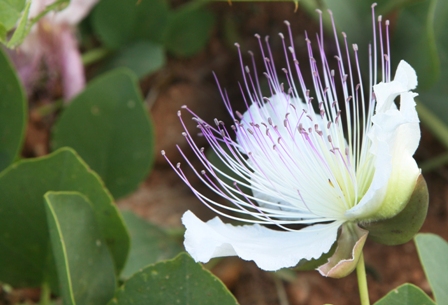
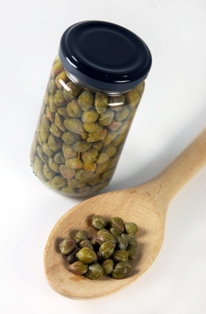
The name “Mallorcan capers” has traditionally been used to market pickled capers, the floral buds of the caper (Capparis spinosa), which in Mallorca are prepared with vinegar and salt.
Capers cultivated in Mallorca mainly belong to the species Capparis spinosa while, in contrast, in Andalusia in the southeast of the mainland, the species Capparis ovata dominates.
The “caper from Mallorca” is small, it has an asymmetrical heart shape and is dark green with numerous small whitish spots.
As for the flavour, what is most noticeable is the intensity and persistence of the vinegar. They have a sour taste, a pleasing saltiness and a mildly astringent effect that lasts a while. They have a fibrous texture with high elasticity, but it is neither sticky nor rubbery.
The “caper from Mallorca” differs from those produced in other places due to its small size and its ability to maintain its firm texture over time, for which it is widely relished.
The main nutritional benefit of capers is the dietary fibre, of which they have significant amounts. They also contain rutin, a flavonoid glycoside with antioxidant and anti-inflammatory properties.
Composition of pickled capers (100g)
- Water 84g
- Protein 2.4g
- Soluble sugars 1.5g
- Lipids 0.9g
- Fibre 3.2g
- Energy value 23 Kcal
Production and manufacture
Harvesting capers is a very meticulous traditional agricultural activity that requires a lot of manual labour, given the nature of the caper bush: it grows horizontally almost at ground level, it has thorns and the small capers are distributed all over the plant.
Fresh capers are not suitable for consumption as they are coarse and astringent. They are only eaten once preserved in vinegar and salt. The preparation process is as follows:
• Stalks that have become attached are removed and then they are rinsed in water to eliminate dust and soil.
• They are soaked in salt-water for 20–25 days. They are then strained and left in water for a few days to remove excess saltiness.
• They are placed in glass jars and covered with water, salt and white wine vinegar.
They are ready for sale after three weeks and have a shelf life of over 2 years.
Historical legacy
There are numerous historical accounts of cultivation of the caper bush and of the preparation and sale of capers in Mallorca and it is said that it was probably the Arabs who introduced the cultivation of capers to the island.
Thanks to the research of Antonio Contreras (2015), it has been possible to verify that one of the earliest references to “Mallorca capers” appears in the property inventory of notary and bibliophile Miquel Abey, dated November, 1493, which describes: two caduffes of land to have capers.
Mallorcan capers with this name appear in the 1735 edition of the Histoire Generale des Drogues Simples et Composees, written by the Sieur Pomet Marachand & Epicier Droguiste, in which the following quote appears in French: “Mallorcan capers are small, salty capers, which we consume in abundance in times of peace”.
Cited in the 1765 Italian translation of the dictionary by author Honoré Lacombe de Prézel (1725-c. 1793) is the following quotation: “i capperi di Majorca che sono piccolo e salati” (Mallorcan capers are small and salty). Noteworthy in the two cited references is the differentiation of “Mallorcan capers” from those of other origins due to their particularly small size.
A few years later, in 1803, the dictionary of merchandise and nomenclature in all languages written by C.H. Kauffman indicates that Great Britain imported small capers from Mallorca (Some small salt Capers come from Majorca).
In the article “Mallorcan products. The caper business” published by Leoncio (pseudonym of Antoni Vidal Vaquer) in La Almudaina (26th of October, 1920), when describing the export of capers he states: “The caper that is most widely accepted by sellers, preservers and the general public is the so called Mallorcan caper because it is the most delicate and has the best taste” and he continues by saying “A few months ago, this Trade Department (he is referring to the Trade Department of the Barcelona Chamber of Commerce) provided information on the production and sale of capers to the British Chamber of Commerce, Spain, from this capital, with data similar to this, emphasising at the same time that the Mallorcan caper is the most preferred and requested variety in all the product’s consumer markets”. (Llull, D. 2010)
The excellent reputation and prestige of the Mallorcan caper is clear due to the written evidence that they were very highly valued, as they still are today. Proof of this is the letter sent in the year 1493 by the nephew of the prior of Lluc to his uncle while he was in Rome in which he relates how the canon Arxartell wants to send him a gift of capers.
So highly valued was the product in the middle of the 16th century that when Emperor Charles I landed in the port of Palma in the year 1541, he was presented with gifts of “Mallorcan capers”.
It is worth noting that according to the history of the Colegio de Montesión written by Pare Borrassà, in 1583 the Jesuits of Palma acquired a country estate to which, between 1596 and 1597, they made various improvements, including the planting of caper bushes. He states: many caper bushes have been planted (parietarias); so that the expense of 200 pounds will be paid for by the yield, which will keep growing each year, as the plants are growing.
Another document that supports the historic and prestigious reputation of Mallorcan capers is a letter from the year 1651 from Vicenç Mut and Rafael Tallades, representative delegates from the Kingdom of Mallorca before the Council of the Crown of Aragon, in which they request the shipment of capers from Mallorca to give as gifts to councillors. Another example is the letter from Gabriel Cánaves y March, residing in Malta in the year 1660, in which he asks his family to send him “Mallorcan capers” as he yearns for them.
In Descriptions of the Pitiusan and Balearic Islands (1787), written by José de Vargas Ponce, farm produce from Mallorca is described and, when referring to capers he reports: capers, according to Don Joseph Quer in his Spanish Flora are the best in Spain. (Llull, D. 2010)
It is also noteworthy that when Queen Isabel II visited Mallorca in 1860, the local Council organised an exhibition of local farm produce in which capers were awarded a silver medal.
The export of “Mallorcan capers” is another indication of the importance of this product for the island of Mallorca, documentation of which dates back to the end of the 16th century. In the history of Mallorca by Juan Bautista Binimelis (1590) it is stated: y no menjs de consideracio y estimació es la cullida gran de les taperes, que Francie, Flandes, y Inglaterra carregan de ellas vaxells com fan dels olis.
In Joseph Quer’s publication (1761) Spanish Flora, or A History of Plants that Grow in Spain, it is reported that capers from Mallorca were already being exported to European countries such as Holland and England.
In Memoria (1767) shown to the King by the Marquis de la Romana, it was declared that 350 quarts of capers were exported from Mallorca and that they yielded a return of 105,000 reals de velló, making it the second most profitable food product.
It is evident that by 1789, the Mallorcan Antoni Marcel was exporting capers to Alicante and Marseilles from the municipality of Llubí. It is also documented that at the beginning of the 19th century capers were being exported from Mallorca to the Canary Islands, Livorno and America.
In Die Balearen, the Archduke Luis Salvador states that capers are being consumed in large quantities all over the island and he provides data on the export quantities of pickled capers, which between 1866 and 1869 was 190 tonnes. The Archduke states that in Llubí, a farmer carried out tasks to improve the quality of the caper from an agronomic perspective, which won recognition for the caper from across the whole island and also from abroad, to the extent that it won prizes in the National Farm Exhibition in Madrid in 1857.
In the mid-20th century, cultivation of the caper bush grew in Llubí and Campos and capers became an important product in the local economies of these municipalities. In the 70s and 80s, two companies were established dedicated to the production of Mallorcan pickled capers, one in Llubí and the other in Felanitx, with annual exports of between 400 and 500 tonnes, which were sent to Great Britain, Germany, Switzerland, Belgium, the United States and Caribbean countries.
From the end of the 90s, the “caper from Mallorca” suffered a recession due to competition that came from the introduction of cheaper foreign capers. These days, the “caper from Mallorca” is also exported to Germany, Switzerland, England, Miami, etc., as well as being sold in Mallorca.
Links to the region
The “caper from Mallorca” has a bioclimatic, human and historic link with the island of Mallorca, which contribute to its excellent reputation.
The caper bush is perfectly adapted to Mallorca’s geoclimatic conditions. It grows very well in conditions with high temperatures, lots of light and low humidity. It can withstand long periods of water scarcity with its development even favouring a lack of water. Cultivation of the caper bush prefers deep, well-drained and loose soil, and calcareous and clayey soil is recommended.
The traditional character of the product stems from the harvesting process, in which the human link is key. Harvesting capers requires a certain amount of experience due to the numerous spines on the bush and also due to the need to choose the plants carefully. After harvesting capers from a plant, they do not grow back until enough time has passed for new flora buds to appear.
Even though production of the product is currently limited due to the high costs of harvesting, the historical legacy mentioned previously demonstrates approval and appreciation of capers by consumers.
Pickled capers from Mallorca are especially appreciated for the longevity of their organoleptic properties.
An example of this appreciation is the fact that, in Mallorca, capers complement a large number of traditional dishes, such as bread with olive oil or trempó (tomato, onion and green pepper salad). They are also an essential ingredient in typical dishes such as “llengua amb tàperes” (tongue with capers), which the Archduke Luis Salvador (1871) highlighted as a much cherished dish in Mallorca.
Capers are also an excellent accompaniment to white meat and are ideal with fried or boiled fish. Many caper recipes can be found in the book: Capers, their universe (Tàperes, el seu univers) by Domingo Llull (2010), for example; skate with caper sauce, chicken with capers and cream, anchovies with capers, hake with capers, etc.
Further proof of their excellent reputation is the fact that Mallorcan capers are currently sold in markets at twice the price of foreign capers, which demonstrates that consumers value the product and are willing to pay the difference in price for a quality product.
It is worth noting that the “caper from Mallorca” is also recognised at an international level, a fact that is evident in articles such as “Kapern aves Mallorca” published in the weekly German language magazine Mallorca Magazin.
Area of production and manufacture
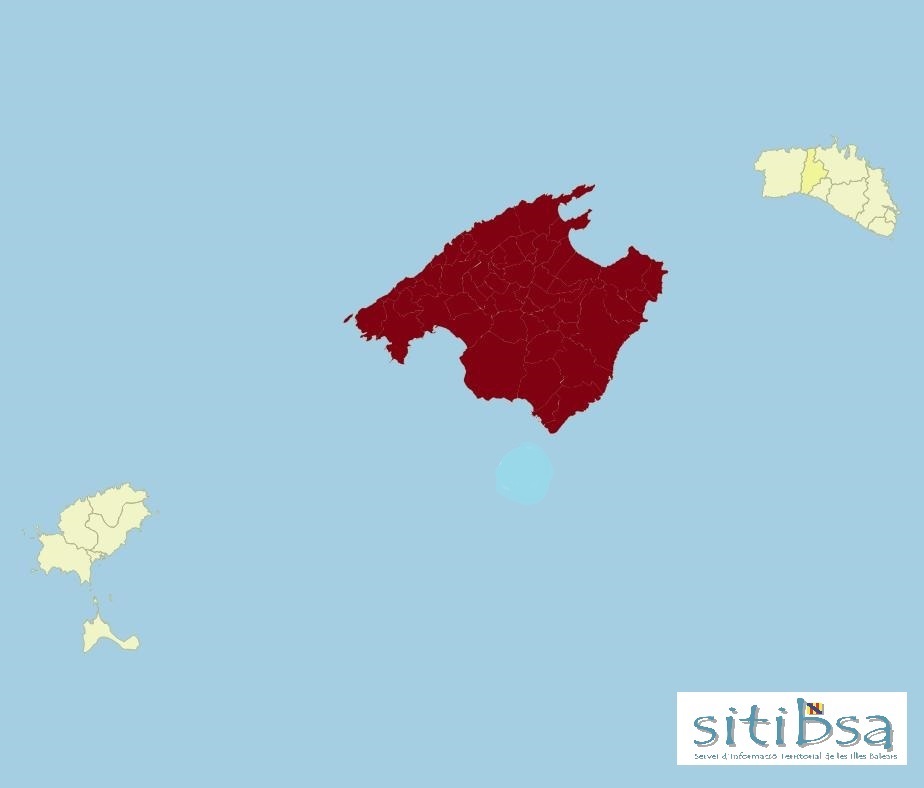
99% of cultivation is concentrated in the regions of Llubí and Campos although they can be found both wild and cultivated across the whole island of Mallorca.
In 2014, there was only one company on record, located in Llubí, manufacturing “Mallorcan capers” pickled in vinegar and salt.
Socioeconomic importance
According to data published by Miquel Serra (2008) there are approximately 230 hectares dedicated to the cultivation of the caper bush, either exclusively or together with grains and almond trees. High production costs mean that most capers are left unharvested.
According to data from the Agricultural Improvement Services (Serveis de Millora Agrària) published in Basic Statistics on Agriculture, Livestock and Fisheries in the Balearic Islands (Estadístiques bàsiques de l’agricultura, la ramaderia i la pesca a les Illes Balears), 2014, the amount of capers produced in 2014 was two tonnes, while around a tonne of pickled “Mallorcan capers” were sold, which meant a turnover of 22,500 euros.